


Novemba on Bringing Adidas and Puma’s Longstanding Rivalry to Life in Docuseries


The story of Adidas and Puma is more than just a brand feud. It’s a tale of family, culture, and global sport that began in a small German town and reshaped industries around the world.
When Disney greenlit ‘Sneaker Wars’, a three-part docuseries exploring that rivalry, Academy directors Novemba – made up of Blair Macdonald and Oliver Clark – were called up just weeks before cameras rolled.
With a brief to capture both the historic roots and the present-day impact of the brands’ competition, the duo set out on a two-year filmmaking journey, combining cinematic documentary style with insider access to top athletes, rare archives, and brand legends.
Here, they discuss how the project came together, how they structured its dual timelines, and what it means to tell such a high-stakes story for a global streaming audience.
LBB> How did you first get involved with 'Sneaker Wars', and at what stage of the project? What was the brief from Adidas, Puma, and Disney?
Novemba> We first heard about the project from a producer we’d known for years, Jack Turner. We’d developed something with him during the pandemic that fell through at the last moment and didn’t make it to production, so we’d been looking for another chance to collaborate.
Out of the blue, we got a call one day, and Jack said, “I think I’ve got something that could be perfect for you guys, and it might move very quickly….”
The series had been in development for some time, but now everything was falling into place. Adidas and Puma had both confirmed their involvement, and Disney was close to finalising contracts. When the official green light came through, we were filming two weeks later.
The brief was simple: tell the story of one of sport’s greatest rivalries. The reality of doing that, we soon found out, was a bit more complicated!
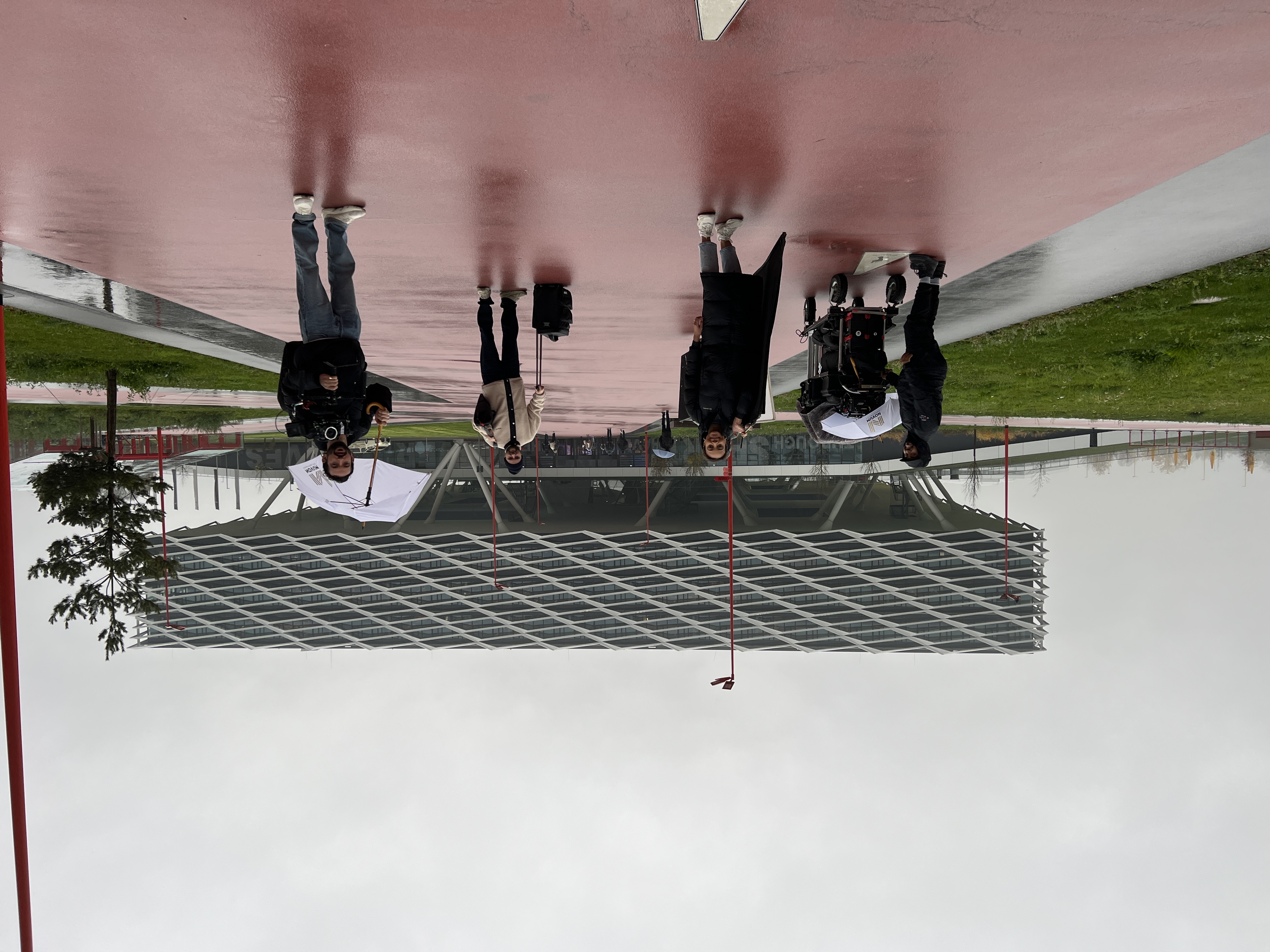
Pictured: Adidas HQ
LBB> The series is structured as a three-part docuseries — how did you approach structuring it, and how did that format help you to include (and balance) historical context, the sports rivalry, and cultural impact?
Novemba> This was a huge story to tell, and the challenge was finding a cinematic structure that could hold both scale and intimacy. We chose to weave two narrative threads together: a present day journey following Adidas and Puma across two years, and a historical timeline spanning a century of sport, culture, and business.
To keep the story clear, we focused on moments that best revealed the rivalry. Each breakthrough or setback carried long term consequences. Adi Dassler securing the German national football team in the 1950s for Adidas, for example, shaped the company’s trajectory for decades. So showing these causes and effects allowed us to intersect the two concurrent timelines.
Episode one begins with the Dassler brothers, their early success with running spikes, the split that divided a town, and a present day athletics rivalry with Noah Lyles and Usain Bolt. Episode two moves to New York, where Adidas and Puma’s push into basketball in the 70s helped turn sportswear into streetwear. That evolution continues today, captured through Puma’s NY Fashion Week runway show. The final episode turns to football, the core of both brands’ business, where their rivalry reached its most global and high-stakes level, and continues today in new arenas, such as Formula 1.
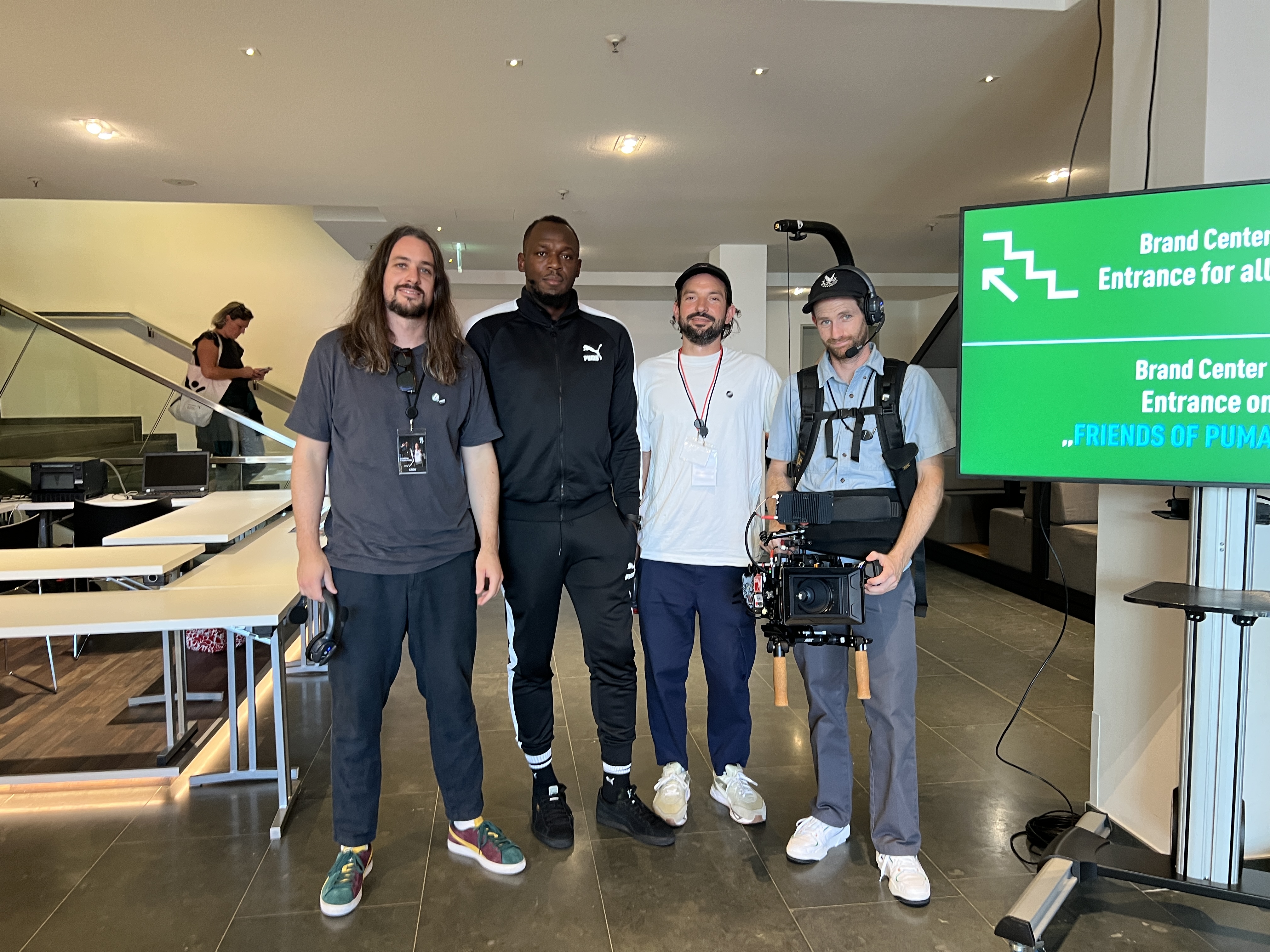
Pictured: Novemba with Usain Bolt and cinematographer Thom Neal
LBB> The series features top athletes, sneaker experts, and brand insiders like David Beckham, Usain Bolt, and Neymar, how did you gain access to these top talents, and what was your approach for drawing out authentic interviews?
Novemba> We were fortunate to have David Beckham as an executive producer on the series. As a lifelong Adidas ambassador, his involvement was instrumental not only in telling this story but also in helping secure other talent. The brands supported with outreach to certain athletes and insiders, but we also pitched directly. Often, we’d put together a short deck, giving a sense of the project and why their perspective mattered. That helped spark interest and open doors.
Logistics were one of the biggest challenges. We didn’t have the resources to fly across the world for a single interview, so we had to be strategic, grouping shoots into windows. Over the course of 24 months, we filmed more than 100 shooting days, often capturing multiple stories in a single location.
In terms of approach, we know we wanted a tapestry of voices and perspectives across the show. So with each interview subject, we focused our line of questions around where they could most authentically contribute. We encouraged people to share anecdotes, memories, and personal turning points with the brands. The pace of the edit comes from weaving those moments together into quick, dynamic beats that build into a larger narrative. The strongest material came when people felt relaxed enough to be themselves, and whatever we are making, we always strive to create that space.
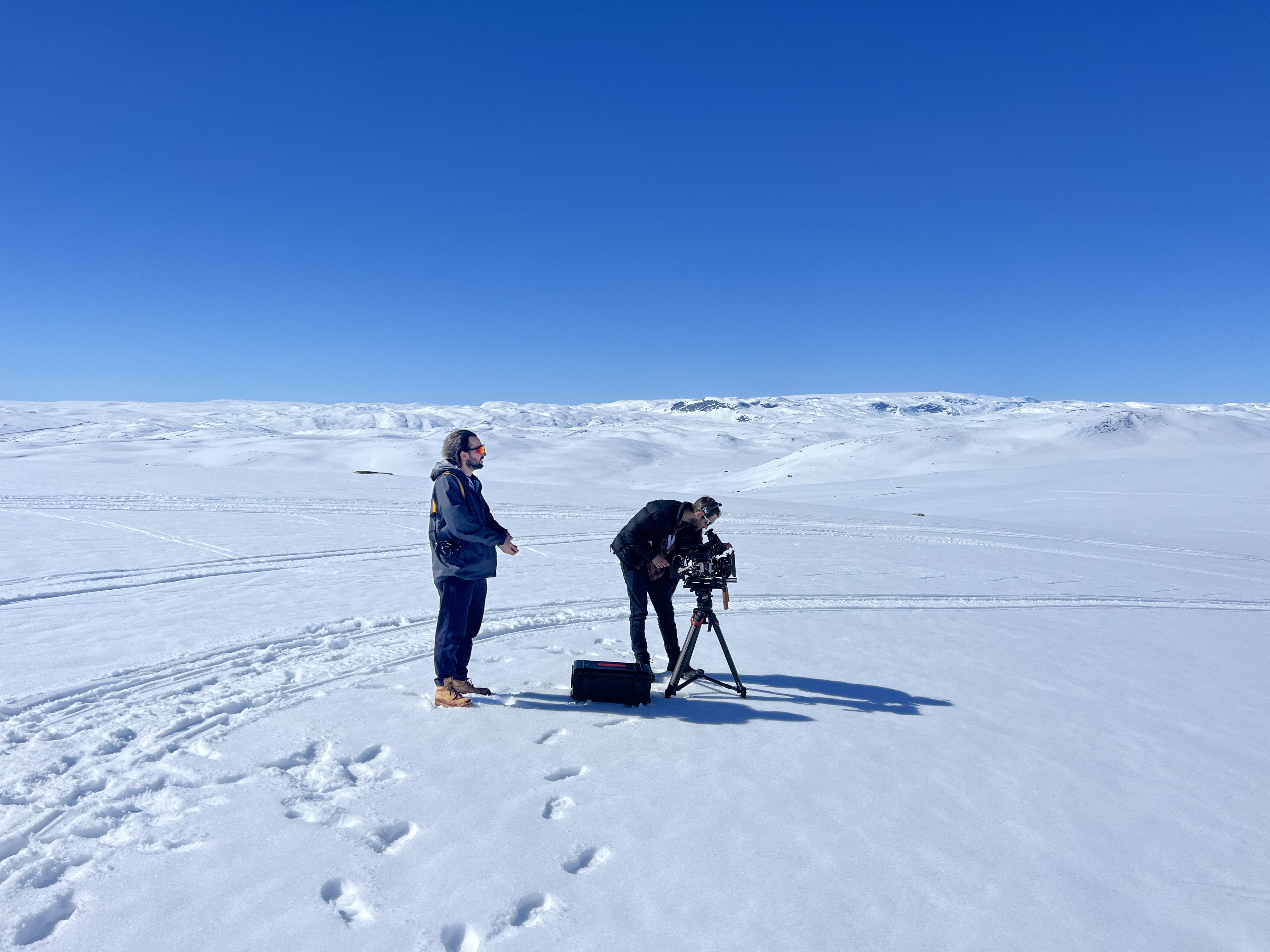
Pictured: Novemba shooting in Norway
LBB> You’re known for your commercial work and your love of sports, but you’ve also helmed another documentary. How does your directorial approach shift between formats?
Novemba> In lots of ways, making a documentary, even one of this scale, takes us back to our original love of filmmaking. Commercials often involve larger crews and more sharply defined roles. On a documentary, it’s more hands on, more intimate.
When shooting 'Sneaker Wars', we were often just a team of six: cinematographer, AC, sound recordist, PA, and the two of us. That meant we almost always had a camera in hand, helping set up shots and light interviews. We also did a lot of producing, and were in constant liaison with the brands to stay across where the story was going. In that sense, documentary feels like ‘total filmmaking’ where you’re immersed in every aspect of bringing the story to life.
Unlike a commercial shoot, there are no storyboards, no rigid shooting schedule. We’d often arrive somewhere with one plan in mind and have to pivot quickly to capture something completely different. More than ever, we had to stay flexible and adaptive, ready to problem solve and make the most of whatever unfolded in front of us.
From the start, our commissioner at Disney+ made it clear that one of the biggest challenges with streaming is attention. He told us, “remember, you might be the second screen in the room.” By that, he meant some people will have the TV on while scrolling on their phone at the same time. A depressing thought, perhaps, but also motivating. It pushed us to create something gripping from start to finish. That is where our experience in commercials came in handy. The edit had to be tight. The history had to be fascinating, but told in a way that felt immediate and engaging.
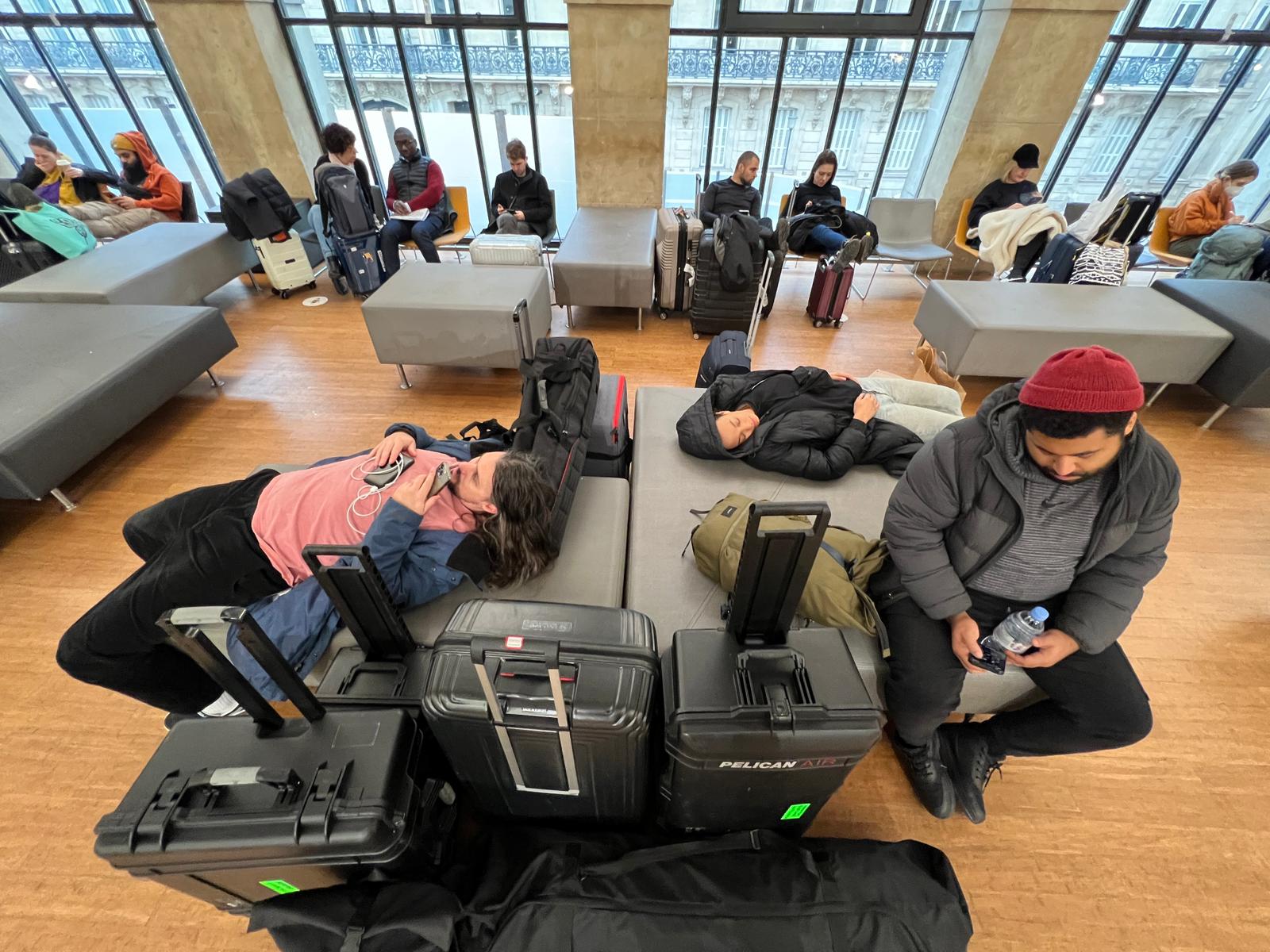
Pictured: Production team in Paris after interviewing Brazilian footballer Neymar
LBB> Why did you choose to centralise the storyline around the Adidas vs Puma feud, and how challenging was it to create that sense of conflict for both viewers and interviewees?
Novemba> The feud between Adidas and Puma goes back to the very formation of the companies, and it always felt like the heartbeat of the story. It’s an incredible story, a rivalry that’s both personal and global. It began with two brothers in a small German town and ended up shaping the world of sports as we know it today. That tension gave us a natural spine for the series.
Historically, the conflict is well defined. The split between the brothers, the divisions within their families, and the “town of bent necks” it created in Herzogenaurach, where everyone first looked down to see which shoe you were wearing, which side you were on. As the companies grew, that rivalry played out in numerous ways, through the development of competing products and technologies, and in their battles for athletes and teams.
Capturing the conflict in the present day proved to be more of a challenge. Adidas and Puma are no longer family businesses; they’re publicly traded companies. But with so much shared history, and with the industry more competitive and cutthroat than ever, it was clear that the rivalry remains alive, no matter how much they each tried to downplay it.
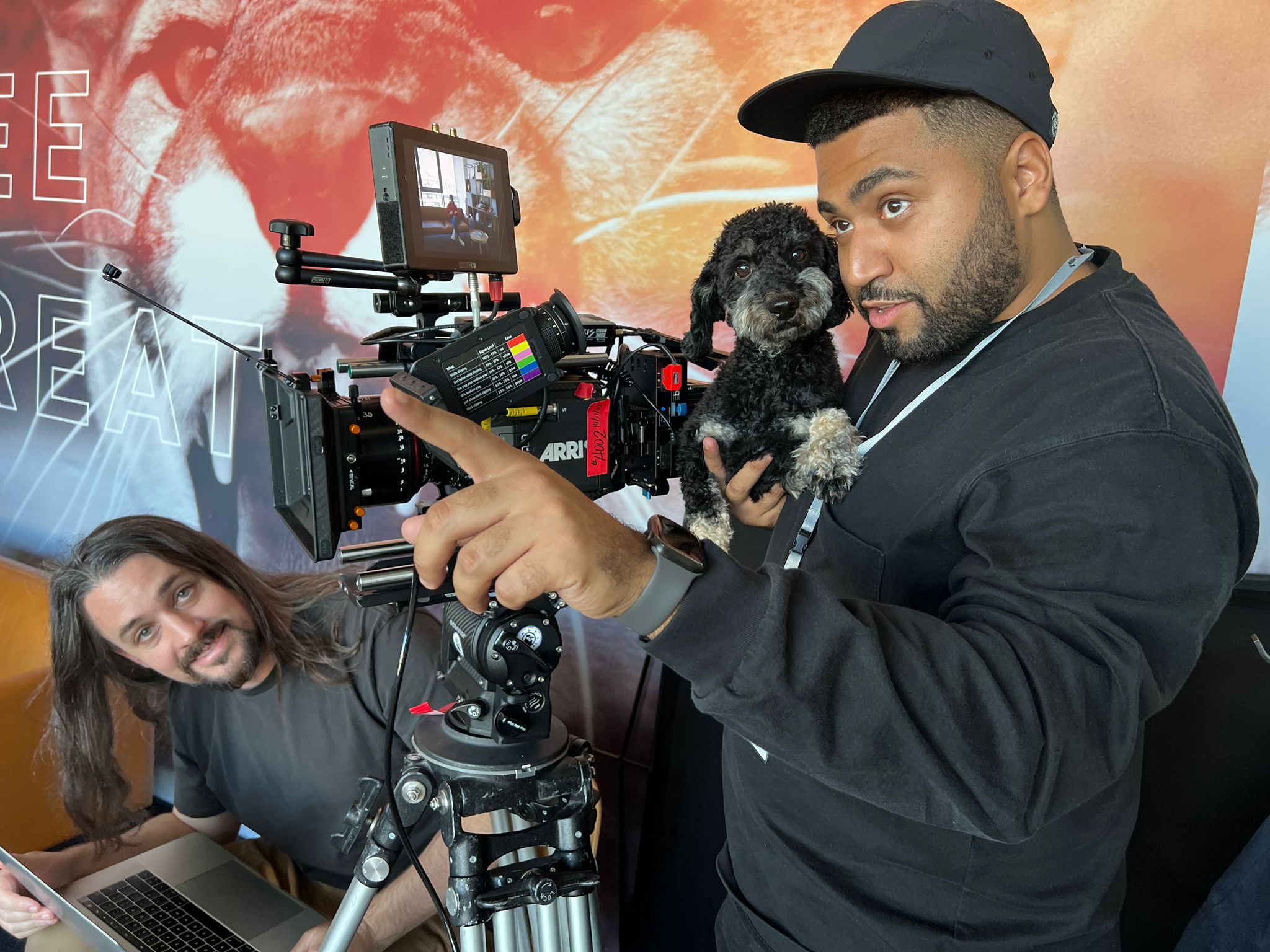
Pictured: Oliver and cinematographer Joel Honeywell at PUMA HQ
LBB> Tell me about the research process and decisions around visually presenting archival/stock footage. Did you use any specific techniques to bring the story to life?
Novemba> We were fortunate to have access to an incredible pool of resources for this story. Family members on both sides opened up their personal archives, giving us rare insight into the brothers’ early years. Beyond that, both Adidas and Puma maintain extensive archives housing thousands of products, from shoes to apparel, alongside photos, sketches, patents, news clippings, and internal documents. We had full access to all of it.
From the outset, we knew we wanted to incorporate archival material in a vibrant and contemporary manner, in keeping with the tone of the show. To achieve that, we collaborated with animator Erwin van den IJssel, who helped us transform static material into something dynamic and alive.
Early on we gravitated toward a cut-paper aesthetic as a way of conveying the idea that history is never fixed. It’s layered and constantly reinterpreted. Adidas and Puma often have competing versions of the same story, so the act of slicing, rearranging, and recomposing imagery became a fitting visual metaphor. At times, we even directly spliced Adidas and Puma material together, underlining just how deeply intertwined their histories really are.
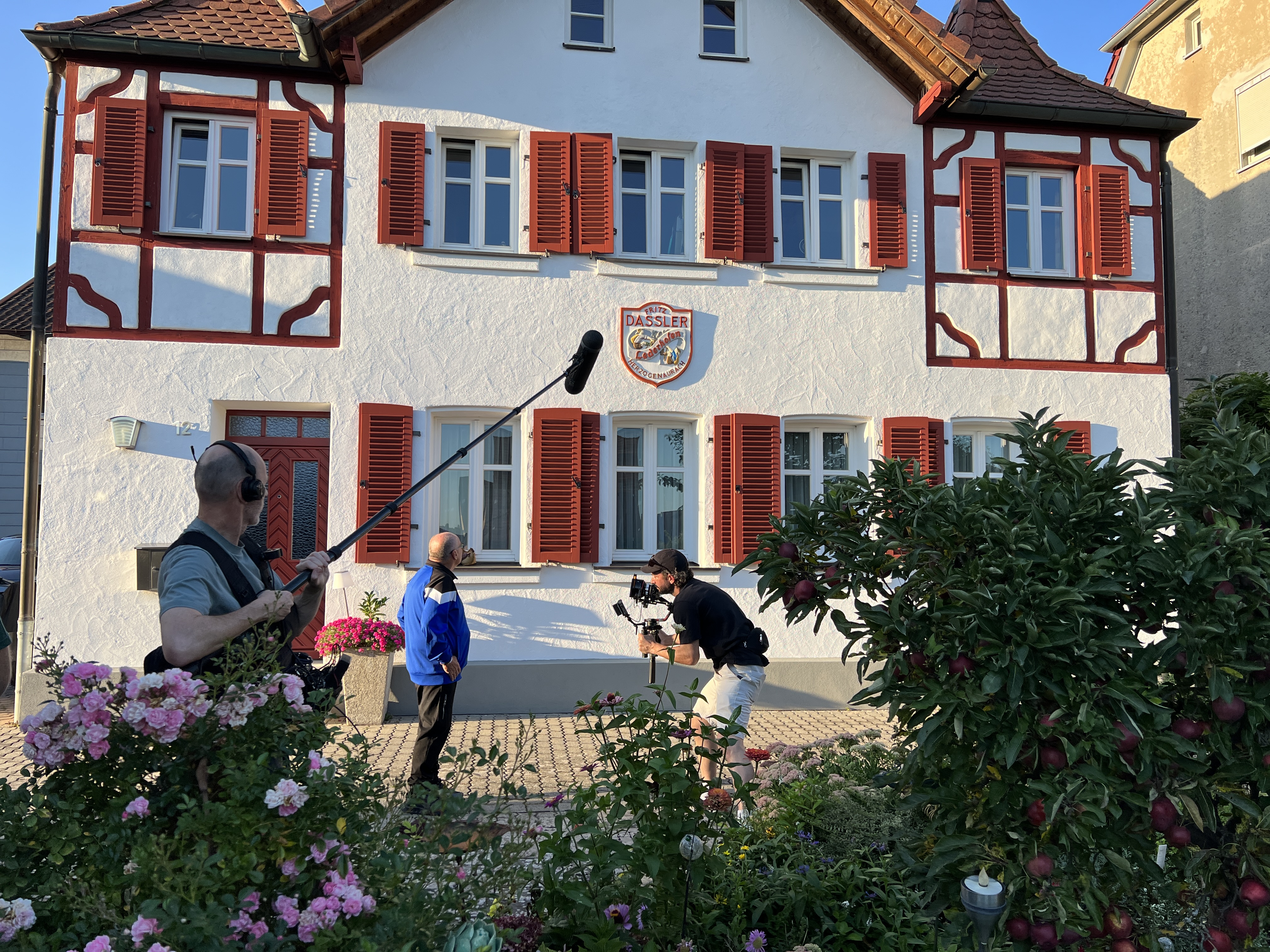
Pictured: Outside the house of brothers-come-rivals, adidas founder Adi and Puma founder Rudi Dassler
LBB> Were there any surprising discoveries or moments during production that reshaped how you told the story?
Novemba> The biggest surprise was how much of our success hinged on building trust with the brands themselves. They had signed on to the project with no editorial control, which was a big deal. To be honest, after years of working with brands in commercials, we were surprised they agreed to those terms, but making the show without that freedom wouldn’t have been viable as a documentary.
As you’d expect, both Adidas and Puma are accustomed to presenting carefully managed narratives to the world, so at first they weren’t eager to share every detail. Building trust, with the brands and company leaders, quickly became one of our main priorities.
That process shaped how we told the contemporary story and gave us access we would not have had otherwise. And without spoiling anything, there is an event that unfolded in real time and changed the course of the series, but we will leave that for viewers to discover.

Pictured: Backstage at New York Fashion Week
LBB> Finally, what’s one thing you personally learned about either or both brands during the making of the series?
Novemba> Germans have lunch at midday on the dot. Without exception.
And secondly, Adidas and Puma are really quite fond of one another. Although they probably won’t admit it to your face.

Pictured: Novemba in ASAP Rocky Puma racing gear


